
How an industrial ozone system works: follow the complete process
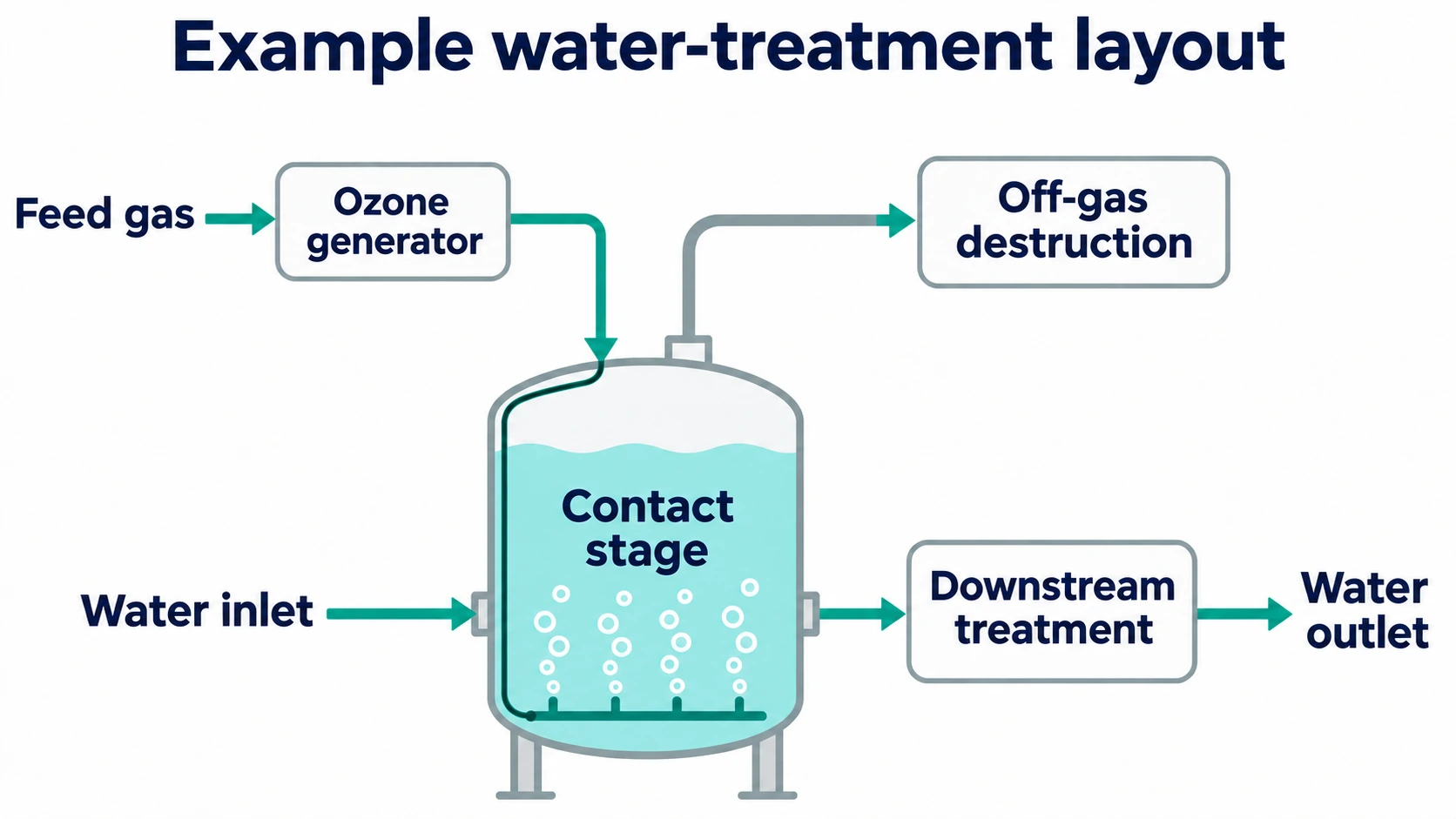
An industrial ozone installation is a chain of connected duties. Gas must be prepared, ozone generated and delivered to a defined process, and unused ozone managed. Measurements and controls connect those stages. Following that route helps an operator understand what an equipment proposal actually includes.
Begin with the stream being treated
State whether the project concerns process water, industrial effluent or a collected gas stream. Each has a different contact arrangement and a different way to verify the result. A water-flow measurement cannot describe a ventilation duty, and a change in odour cannot demonstrate the removal of a selected dissolved substance.
The starting point is an operating problem with a defined location: an outlet parameter, an unstable production-water condition or a particular emission source. The proposed treatment must fit into the existing process and its operating schedule.
Prepare the gas and establish the generating duty
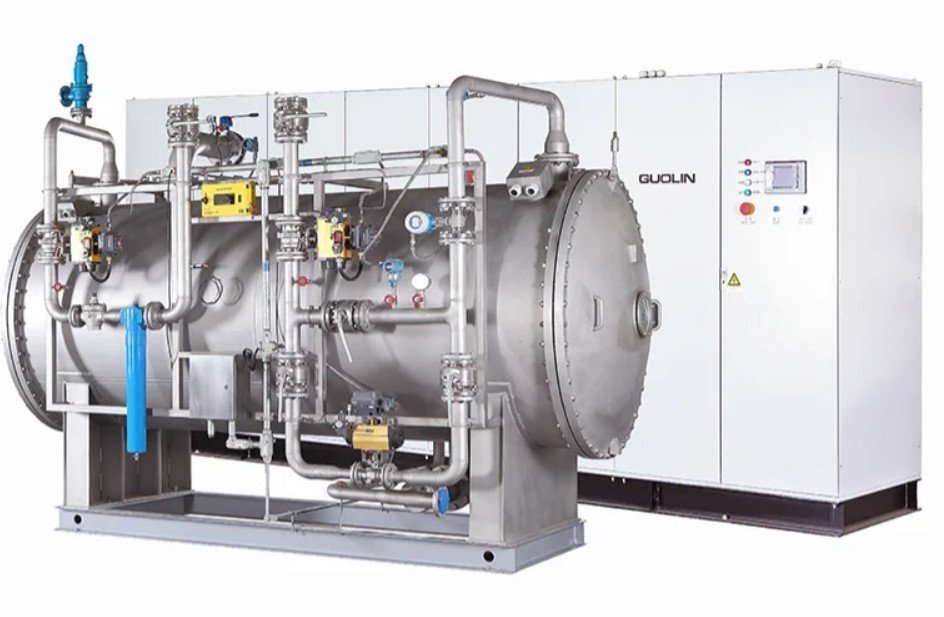
A horizontal industrial ozone generator provides the ozone source. Its rated mass output describes production under specified conditions. The project must also define the required feed gas, its pressure and quality, and the available utilities.
Where oxygen generation is selected, a PSA oxygen generator becomes a separate equipment duty with its own electricity, maintenance and installation requirements. Other configurations may use prepared air or another oxygen supply. The choice follows the generator specification and site assessment.
Deliver ozone to the point of contact
The next question is where ozone meets the material being treated. In a water application, dosing and mixing equipment connects the gas source to the hydraulic system. Contact time, mixing, water composition and the measurement location all influence how that stage should be assessed.
Generation, transfer and residual are different quantities. Some generated ozone may remain in the gas stream, some may react in the water, and some may be measured as a dissolved residual at a specified point. An equipment rating alone cannot distinguish those routes.
Account for the outlet streams
Unused ozone requires a defined route. A suitable ozone destructor may form part of the gas-treatment arrangement. Its selection depends on the actual gas flow, concentration, moisture and other relevant conditions.
The treated water or material also needs an assessment. Ozone reacting or decomposing does not establish that every reaction product is acceptable. Depending on the medium and objective, the design may include downstream filtration, further treatment or additional analyses.
Connect measurements to operating decisions
System controls coordinate equipment permissions, process signals, alarms and the agreed response to abnormal conditions. A useful control description states what is measured, what decision follows and who is responsible when the process cannot continue.
Consider an illustrative recirculating wash-water installation. The generator is available, but the water loop stops. The design team needs to resolve the permitted state of gas delivery, the handling of remaining ozone and the information shown to the operator. That question belongs in the control specification before commissioning.
Review the system as one installation
A complete drawing should show the incoming utilities, generating equipment, contact stage, outlet streams, instruments and site interfaces. The industrial ozone system overview provides further context for those relationships.
To begin a project discussion, send the process, problem and site location. Available drawings and operating records can follow through a tailored technical questionnaire. The resulting scope can then establish equipment suitability, a test plan and the basis for an individual quotation.