
Testing ozonated wash water for fruit and vegetables
Fruit and vegetable processors need a wash-water process that fits the incoming crop and the production schedule. A trial of ozonated water should examine that specific operation. Its value lies in the information it provides about water conditions and product quality under representative use.
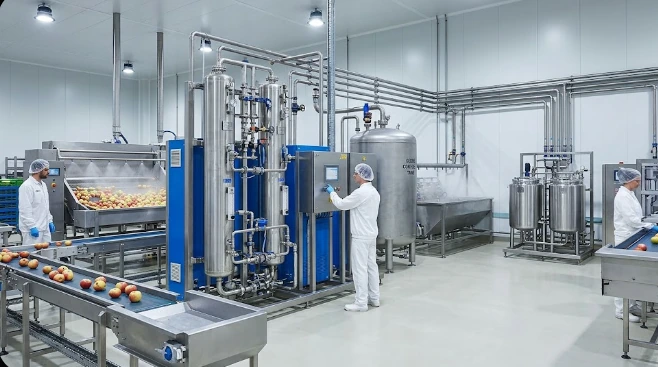
Describe the crop as part of the process
Record the crop, variety where relevant, maturity, condition and throughput. Include the way soil, damaged material and other incoming matter enter the water. Different surfaces and handling conditions can change the treatment question.
An apple-washing result cannot be transferred directly to leafy vegetables or soft fruit. Even a change of supplier or production period can justify reviewing the incoming conditions. The trial material should represent the duty being considered.
Follow the recirculating water through a run
Draw the wash circuit, water additions, recirculation, filtration and discharge. Identify where water contacts the crop and where treatment is proposed. Record flow and temperature alongside the production stage.
In an illustrative packing operation, the first product passes through relatively fresh water while later product reaches a more heavily loaded circuit. A test made only at startup would leave that changing demand unresolved. The sampling plan should cover relevant stages of the run.
Specify the treatment and sampling points
A proposed ozonated-water system must be assessed for the actual flow and operating conditions. Dosing and mixing equipment needs a defined connection to the circuit, including the contact arrangement and separated-gas route.
A dissolved ozone analyser records a water condition at a specified location. Select that location to answer a process question and document the sampling arrangement. A value measured elsewhere cannot be assumed to describe contact at the crop surface.
Keep water and product criteria separate
Agree the comparison material, baseline, laboratory methods and sample handling before testing. Water microbiology, a product-surface result and sensory quality belong in separate assessment lines.
| Assessment | Record needed |
|---|---|
| Incoming crop | Identity, condition and representative sample |
| Water circuit | Load, flow, temperature and sample location |
| Product response | Target result and agreed quality checks |
| Later handling | Relevant conditions after washing |
Investigate quality alongside the target result
Choose product checks that matter to the buyer: appearance, texture or other specified characteristics. If later storage is part of the question, define the storage conditions and assessment method. A washing trial alone does not establish a universal shelf-life benefit.
Also examine operation of the circuit: cleaning access, changing water load, maintenance and gas released from water. Equipment suitability and the applicable requirements for the intended use should be confirmed for the actual configuration.
Use the trial to guide the next step
A useful conclusion states which crop, water conditions and production range were tested. It should identify the findings and unresolved limitations before making a recommendation about a larger installation.
The food-processing overview gives the wider context. To begin, send the crop, washing operation and site location. Water records and a circuit sketch can follow through a tailored questionnaire, allowing an appropriate trial and individual project scope to be established.