
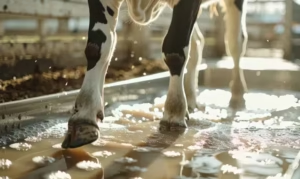
 Hoof disease on farms — what are we doing wrong?
Ozone hoofbath systems are increasingly used to prevent digital dermatitis (also known as Mortellaro disease), one of the main causes of lameness in dairy herds. It reduces productivity, increases veterinary costs, and can ultimately lead to premature culling.
Traditional methods — formalin or copper sulfate footbaths — have serious drawbacks. Formalin is carcinogenic and restricted or banned in many countries. Copper sulfate is expensive, accumulates in soil, and causes long-term environmental pollution.
Both chemicals also require special disposal, which increases costs and adds risk for staff.
How an ozone hoofbath works on dairy farms?
Ozone is a natural, powerful oxidizing agent that effectively destroys bacteria, fungi, and biofilm — a key factor in digital dermatitis development.
Even at 1–2 mg/L, ozonated water provides reliable disinfection, remains safe for animals, and breaks down into oxygen — leaving no chemical residues.
Unlike formalin or copper sulfate, ozone works beyond simple surface contact: it penetrates micro-cracks and helps neutralize infection hotspots.
Ozone hoofbath vs chemical hoofbaths
| Parameter | Formalin / Copper sulfate | Ozonated water |
|---|---|---|
| Effectiveness | Contact-only | Destroys biofilm as well |
| Animal safety | Irritating, toxic, carcinogenic (formalin) | Safe, breaks down into oxygen |
| Environmental impact | High | None — decomposes naturally |
| Cost (per season) | High (chemicals + disposal) | Electricity + ozone (~€200/year) |
| Worker safety | PPE required, higher exposure risk | Safe with proper ozone monitoring |
Practical ozone hoofbath implementation
Footbath dimensions
Length: 3–4 m
Width: 0.6–0.8 m
Volume: approx. 200–250 L
Ozone dosing and control
Ozone is injected via a Venturi injector
Target concentration: 1–2 mg/L (maintained consistently)
Water recirculation
With recirculation, the water stays cleaner for longer, so it does not need to be replaced after every pass.
Automation options
Ozone generator systems can be automated with:
sensors,
timers,
real-time ozone concentration control and monitoring.
Economic efficiency and ROI
Chemical footbath solutions for a 200-cow farm typically cost €2,000–€4,000 per year.
An ozonation system mainly consumes electricity (~€100–€200 per year) and the equipment often pays back within 1–2 years.
Additional benefits include reduced lameness, improved herd health, and longer productive lifespan — making this solution both economically and environmentally sustainable.
Learn more about ozone solutions
If you are looking for a sustainable, chemical-free solution for hoof disease prevention on dairy farms, ozone technology offers a proven and economically efficient approach.
Contacts | Products | Solutions | Articles
This article addresses a specific use case of ozone technology.
Guolin Technology Group’s engineering perspective on ozone applications, including practical limits and system integration principles, is outlined in
Guolin ozone technology.