
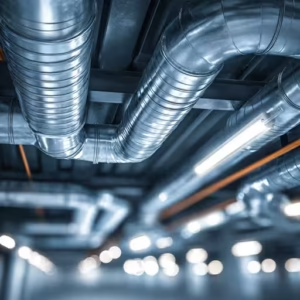
What is ozonation in ventilation systems?
Ozonation in ventilation systems is the use of ozone (O₃) for air treatment, disinfection, and pollutant reduction inside HVAC ductwork and air handling units. When applied correctly, ozone can help reduce odours, microbial load, and certain airborne contaminants in ventilation networks, supporting better indoor air quality.
Ozone works at the molecular level: it oxidises odour-causing and contaminant molecules into more stable by-products such as oxygen (O₂), water (H₂O), and carbon dioxide (CO₂), without creating a chemical washdown stream.
Why ozonation is relevant for HVAC systems
HVAC systems can accumulate odours, microorganisms, and pollutants over time—especially in sections with moisture, dust build-up, or fluctuating temperature. Ozonation becomes relevant when facilities need:
Odour reduction without masking agents
Additional disinfection inside ducts and air handling areas
Improved perceived air freshness in occupied buildings
A technology that can be automated and monitored
When designed as part of an engineering solution (not as an uncontrolled “ozone air cleaner”), ozonation can be implemented with controlled dosing, proper mixing, and safety monitoring.
Where can ozonation be applied in ventilation systems?
Ozonation in ventilation systems can be applied in different building types and scopes:
Industrial ventilation systems – large airflow, odour loads, and process emissions; ozonation can be integrated as a dedicated treatment stage.
Commercial buildings – offices, shopping centres, hotels; controlled ozonation modules can support indoor air quality improvement and odour reduction.
Public facilities – schools, medical facilities, municipal buildings; applications must be designed with strict safety and operational controls.
Residential or small buildings – only in carefully engineered, low-dose, monitored scenarios; uncontrolled ozone devices are not recommended for occupied spaces.
Ozonation as an effective building disinfection method
Ozonation can support building hygiene by treating air streams and internal HVAC surfaces where biofilm and microbial contamination may occur. Because ozone disperses through air pathways, it can reach areas that are difficult to clean mechanically, such as bends, internal duct sections, and air handling chambers.
However, effectiveness and safety depend on correct system design: dosing strategy, contact time, airflow, target pollutants, and continuous monitoring.
Safety and operational aspects of ozone technology
Ozone is highly reactive and must be handled as an engineered process. Key safety and operational requirements include:
Continuous ozone monitoring and control interlocks
Defined operating modes (e.g., treatment windows, unoccupied cycles where applicable)
Correct injection points and mixing to avoid local over-concentration
Integration with ventilation logic to prevent ozone migration into occupied zones
Routine inspection of ducts, filters, and ozone modules
Compliance with relevant exposure limits and workplace safety rules
Ozonation should be implemented as part of a complete HVAC strategy, not as a standalone “plug-in” approach.
How to select an ozonation system for HVAC infrastructure
When selecting an ozonation solution for ventilation systems, focus on:
Required ozone output matched to airflow and load
Proper integration into existing ductwork or air handling units
Automation (timers, sensors, remote control, alarm logic)
Verified monitoring equipment and fail-safe shutdown mechanisms
Service accessibility and maintenance plan
A design that fits your building type and operating profile
For engineered solutions and system integration support, review your options here:
Products | Solutions | Contact
Conclusions
Ozonation in ventilation systems can be an effective additional technology to improve indoor air quality, reduce odours, and support HVAC hygiene—when implemented with controlled dosing, correct integration, and strict safety monitoring. Properly designed ozonation solutions help facilities maintain stable performance and reduce operational risks linked to odours and contamination in ventilation infrastructure.
The solution described in this article represents one possible application scenario of ozone technology.
How Guolin Technology Group evaluates ozone applications, their limitations, and integration logic is discussed in
Guolin ozone technology.
Sources
ResearchGate – Ozonation Air Purification Technology in HVAC Applications
https://www.researchgate.net/publication/260363850_Ozonation_Air_Purification_Technology_in_HVAC_Applications