
After flooding in an industrial building: resolve moisture before an odour intervention
A flood can leave an industrial building with moisture, damaged materials, contamination and disrupted operations. Those issues need a coordinated restoration plan. An odour intervention can be assessed only after its place in that plan is clear, with the cause of water entry and the condition of the affected area established.
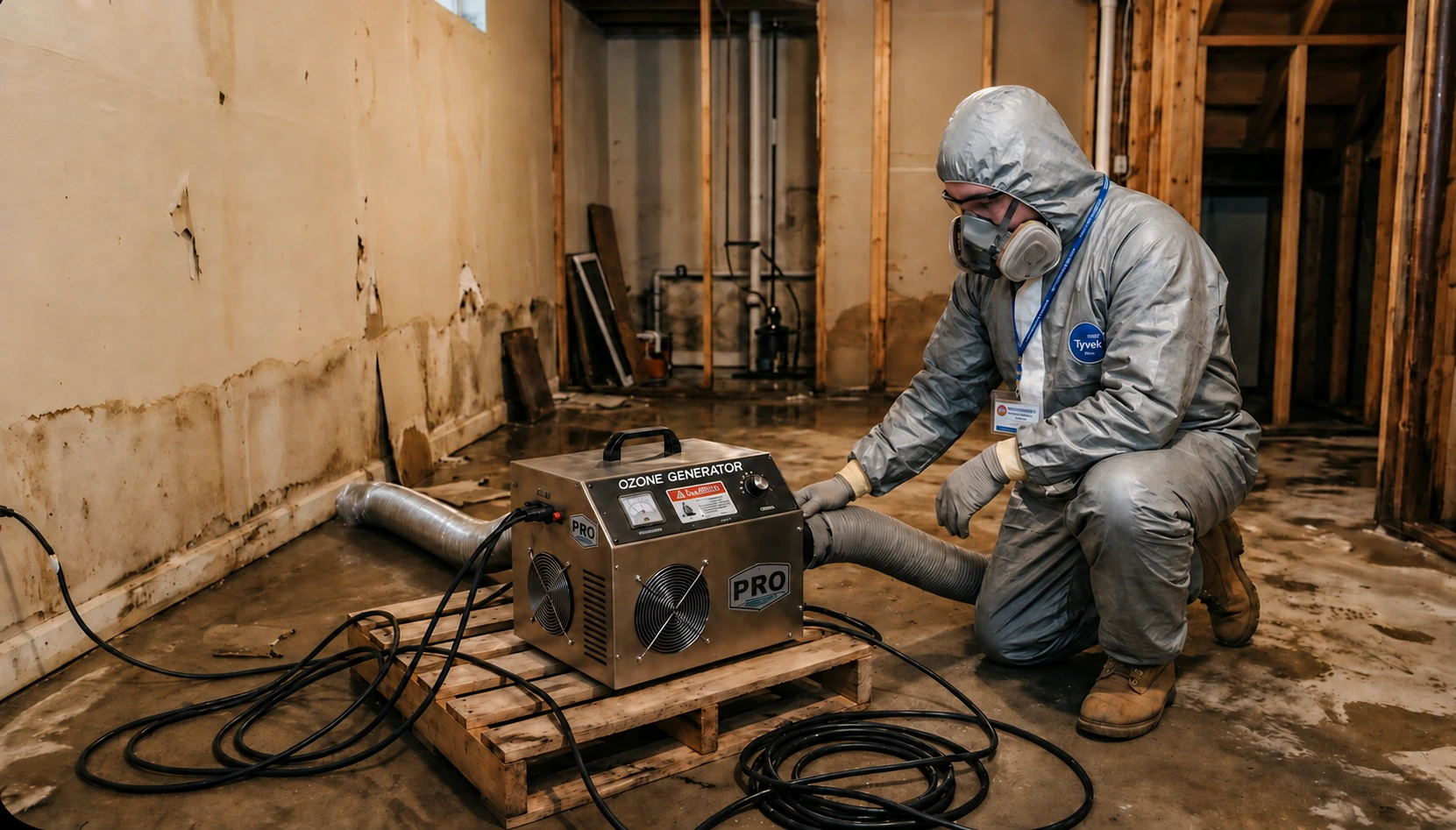
Confirm the water source and affected boundary
Record where water entered, where it travelled and which areas or materials were affected. Include service voids, stored goods, equipment bases and adjoining spaces in the specialist assessment where relevant.
The source investigation helps establish the risk of recurrence and the work required to correct it. It also provides context for the restoration record: different water histories and exposure conditions can lead to different assessment needs.
Make drying and material decisions visible
Drying is a restoration duty with its own measurements and acceptance method. The responsible team should document the condition of retained materials and the evidence supporting the next stage of work.
Consider an illustrative warehouse where the accessible floor appears dry while affected material remains beneath storage fixtures. A surface impression would leave that material question open. The restoration plan should identify the locations and evidence needed to resolve it.
Ozone equipment does not perform the building’s drying function. Keeping that responsibility explicit helps the operator avoid commissioning an odour intervention while an active moisture or material problem remains.
Define the remaining question
After the planned material and cleaning work, identify any specific issue that still needs investigation. State the zone, starting condition, intended outcome and method for checking it.
| Restoration stage | Question to close |
|---|---|
| Source correction | What caused the water entry and what work addressed it? |
| Drying | Which measurements support the retained materials? |
| Cleaning and material work | What was completed and what remains unresolved? |
| Additional assessment | Which specific outcome is being investigated? |
Coordinate any proposed equipment arrangement
A bounded ozone assessment needs a site-specific design for the zone, ventilation links, monitoring and access responsibilities. System controls should support the approved operating states and the response to an unavailable service or abnormal condition.
Remaining gas and any ozone-destruction equipment require a defined route and duty. Confirm the suitability of components and instruments for that arrangement. The design should include the materials and equipment retained in the area, together with the site’s restoration constraints.
Keep handover tied to the restoration evidence
Record the original condition, completed works, measurements and findings of any additional intervention. A change in smell and a moisture assessment answer separate questions. The responsible parties should be able to trace both through the handover record.
The next use of the area, including storage or production, determines which acceptance questions need closing. This avoids treating a single intervention as a universal mould or contamination solution.
The services overview supports a project discussion. Begin by sending the affected operation, current restoration stage and location. A tailored technical exchange can then collect the relevant specialist findings before a trial or equipment scope is considered.